
Compliance is not new for JD Edwards organizations, but it’s getting harder to manage. SOX and ISO 27001 are two of the most common frameworks affecting JDE customers, and while companies often approach them separately, the security controls needed to support both overlap heavily: access reviews, segregation of duties, audit evidence, and security change control show up in both.
The real problem isn’t a lack of understanding of the requirements. It’s whether an organization’s systems and processes can support them without piling more manual effort onto the teams responsible for carrying them out.
What the Data Shows
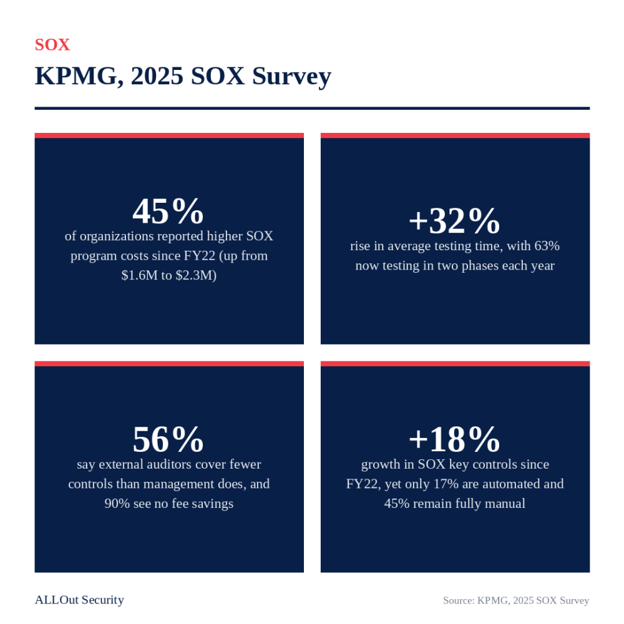
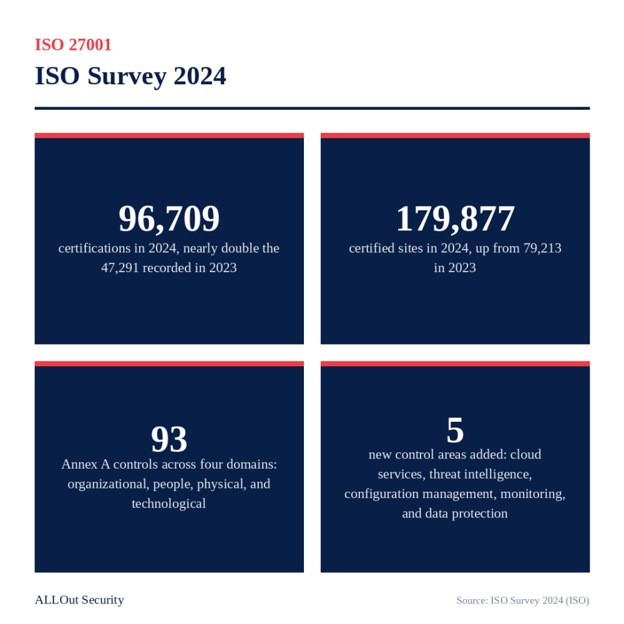
SOX is built around financial integrity and ISO 27001 focuses on information security risk. Both point to the same trend: control scope is growing faster than the resources and automation required to manage it.
SOX (KPMG, 2025 SOX Survey):
ISO 27001 (ISO Survey 2024):
In response to these rapid changes, organizations are running gap assessments, updating documentation, rethinking risk strategies, strengthening evidence gathering, and assigning clearer ownership.
The underlying requirements are the same: continuous visibility, continuous control, and the ability to demonstrate that controls are working throughout all operations. Responsibility here extends well beyond the security administrator’s desk, into finance, audit, and IT leadership alike. Defining these controls is one thing; making them work day to day inside JD Edwards and providing proof of effectiveness is where the real challenge lies.
Beyond Native JDE
The controls that SOX and ISO 27001 now expect organizations to comply with are difficult to achieve using standard JDE functionality alone. Native audit tracking through F9312 covers a limited set of event types, roughly 28, which leaves considerable blind spots relative to the scope auditors expect to see.
Best-Practice Solutions for Sustainable Compliance in JDE
This is exactly where ALLOut provides workable solutions as an added layer inside your existing JDE ecosystem, built on native JDE tables, roles, menus, and security. With roots in security and compliance dating back more than 20 years, ALLOut is designed to make the biggest difference to your SOX and ISO readiness across four key areas.
Access design and review
Without foundations for a closed security model in place, there is no reliable starting point for your compliance strategy. StartOut provides best practice and up-to-date security and task view data to help you build process-based roles rather than broad, hard to audit access. Teams can compare and configure their current security posture against the compliance standard and catch gaps as they emerge, well ahead of audit time.
Segregation of duties
Both SOX and ISO treat segregation of duties as one of the core controls that has to be provable, not just defined, and SoDMaster is built with that standard in mind. It provides teams with pre-built industry-trusted SoD rules, critical process lists, and mitigating controls that can be adapted or built from scratch, then loaded directly into JDE. Reports can run in real time by user or role, filtered by access level, mitigating controls, or menu access.
Monitoring and audit evidence
Where native JDE tracks around 28 event types through F9312, ALLOut extends visibility to more than 68, giving compliance owners a more granular view of what is actually happening in the system. UXPlus Risk Alert turns that data into actionable User Defined Objects (watchlists and dashboards) covering change audits, SoD breaches, and critical access, with a built-in access and approval workflow.
Change control
With RBAC adoption now reported at 48 percent, structured role assignment is becoming a baseline expectation for compliance rather than a nice to have. ALLOut’s role-based SoD restrictions can warn or hard stop an assignment that would create a conflict, while role assignment restrictions, user recipient restrictions, and pre-approval lists let role owners manage access without routing every request through IT.
Implications for Key Stakeholders
Compliance demands in JDE are not getting simpler for IT, audit, finance and management teams. Control scope keeps expanding, and manual processes are not built to keep pace.
The organizations managing SOX and ISO 27001 most effectively are the ones that have moved enforcement, monitoring, documentation and evidence gathering into the system itself. Data mining is automated through consistent processes, and effective controls are provable at any point in time.